The House
One sea, one breath, one inheritance.
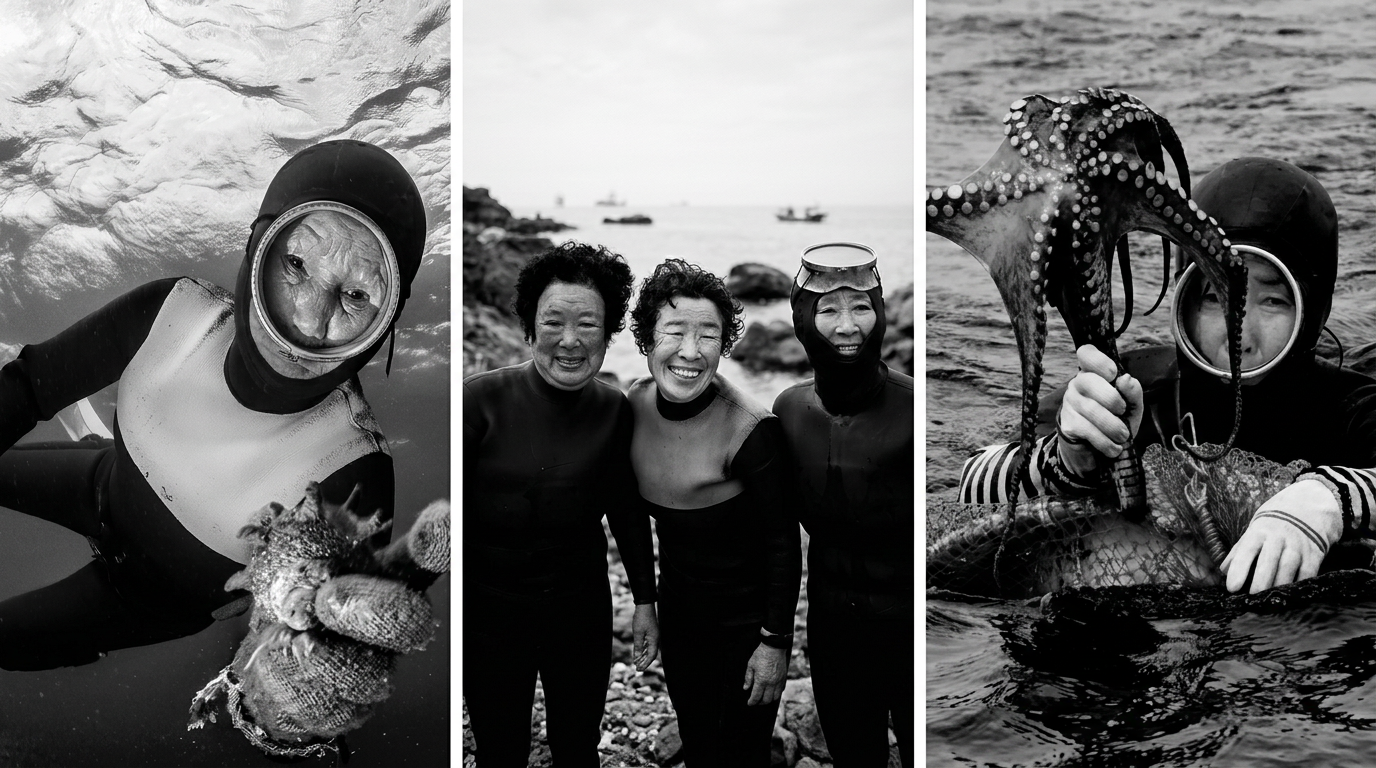
Long before diving was a sport, the women of the Indo-Pacific were already in the water. From the volcanic reefs of Jeju, to the shores of Ise-Shima, to the Sulu and Sulawesi seas, the same quiet knowledge has been kept by the same kind of hands — for centuries, without tanks, without spectacle, and almost always passed mother to daughter.
Different coastlines. Different languages. The same room.
Every coastline gives the breath a name.
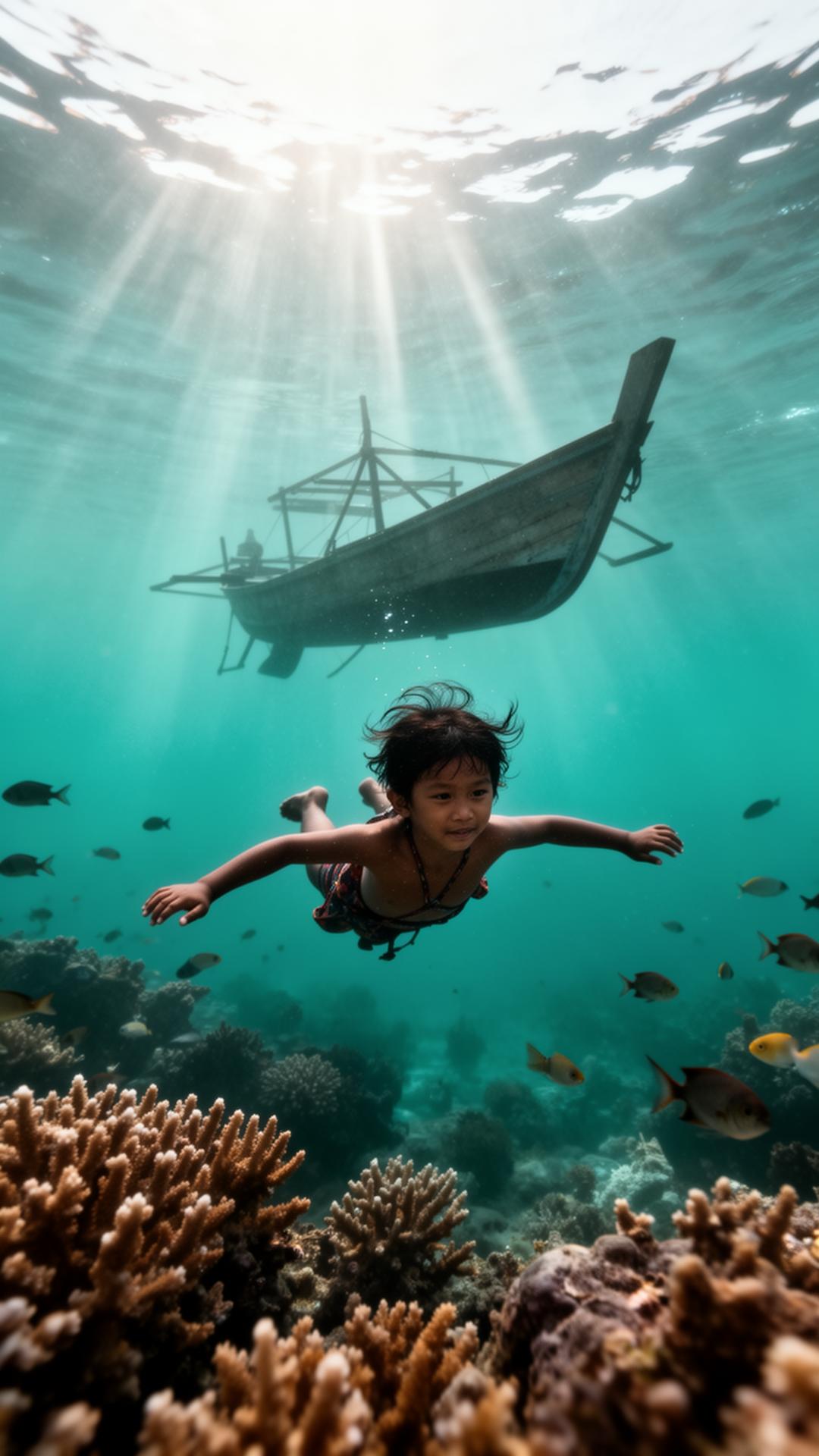
On Jeju, the Haenyeo surface with a long, soft whistle they call sumbisori — and the village hears its women come home. On Ise-Shima, the Ama call the same sound isobue, the sea whistle. In the Sulu Sea, the Sama-Bajau simply hold it longer than the rest of us thought a body could.
Three names. One act. The breath taken before entering the water — and the breath released on returning — is the oldest ritual these coasts share. It is not a statistic. It is not a sport. It is the moment a person becomes, for a few minutes, kin to the sea.
Knowledge that is taught only by going in together.
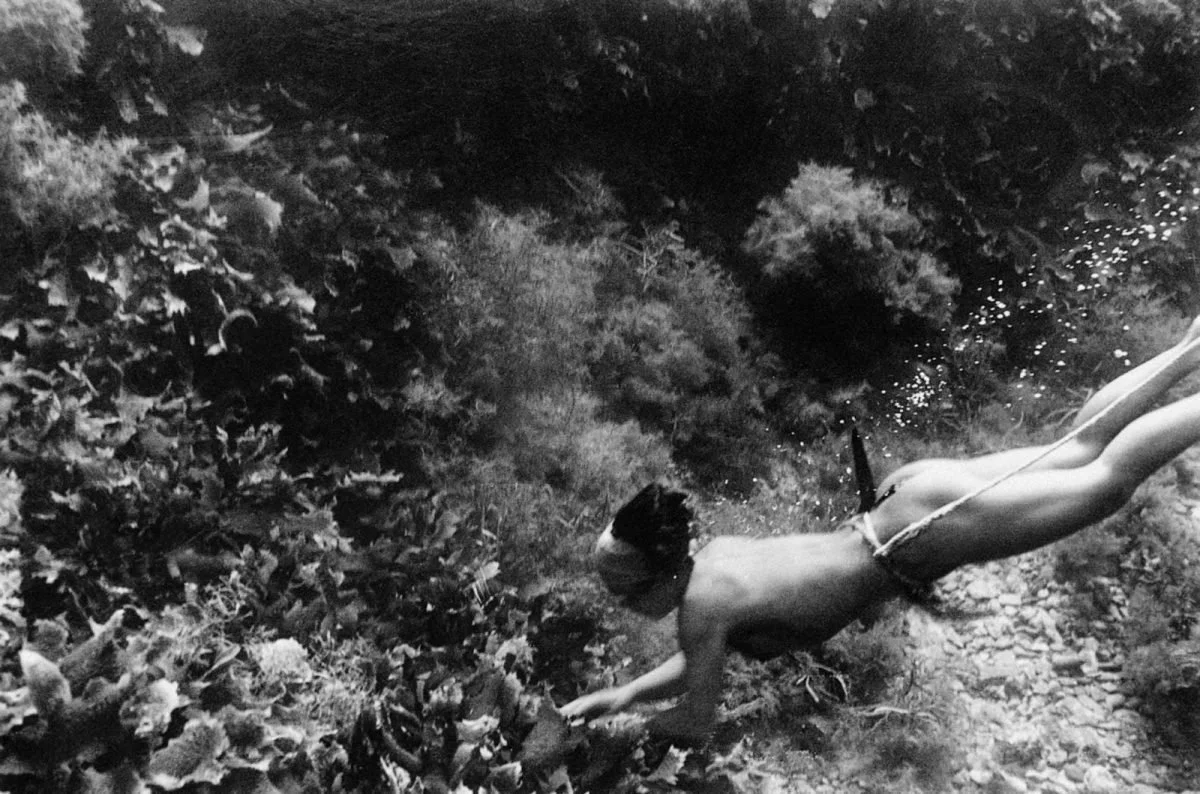
Across all three traditions the craft is matrilineal, and it is taught the same way: in the water, in real time, by an elder who has not stepped aside. Haenyeo grandmothers dive beside their granddaughters into their ninth decade. Ama lineages reach back two thousand years on the same reef. Sama-Bajau children learn to swim before they learn to walk.
None of it is written down. None of it can be. The technique is in the body of someone older than you, and the only way to receive it is to follow her down.
Whatever else this house makes, it tries to remember that lesson: the things worth keeping are taught slowly, by hand, by someone who has done the work longer than you have.
Not a resource. A relation.
The Haenyeo pool the day's catch equally — the eldest and the youngest take the same share — because the reef is not theirs to win from. The Ama keep the fire low and the talk lower in the amagoya, because the sea is listened to, not announced over. The Sama-Bajau, whose name means together in their own language, hold that humans are the peer of the fish, the coral, and the mangrove — not the crown of any of it.
Three theologies, one posture: the sea is kin. You take only what you can carry, you mend the boat instead of replacing it, and you leave the reef capable of feeding the granddaughter who is not yet born.
"The breath taken before entering the water is a ritual,
not a statistic."
One sea · One breath · One inheritance
The House
A modern house, standing in a very old room.
We did not invent any of this. We are the youngest generation in the room — and we are trying, quietly, to be worthy of it.
Shio no Wa is headquartered in Singapore, which for two centuries was the trading nexus of the region's pearl industry — the meeting point of the seas the Haenyeo, the Ama, and the Sama-Bajau have always known.
We make apparel, jewellery, and considered objects for the woman and the man who still go into the water. Fewer pieces. Better pieces. Built to be owned for a lifetime and passed on, in the same posture the sea was passed to us.
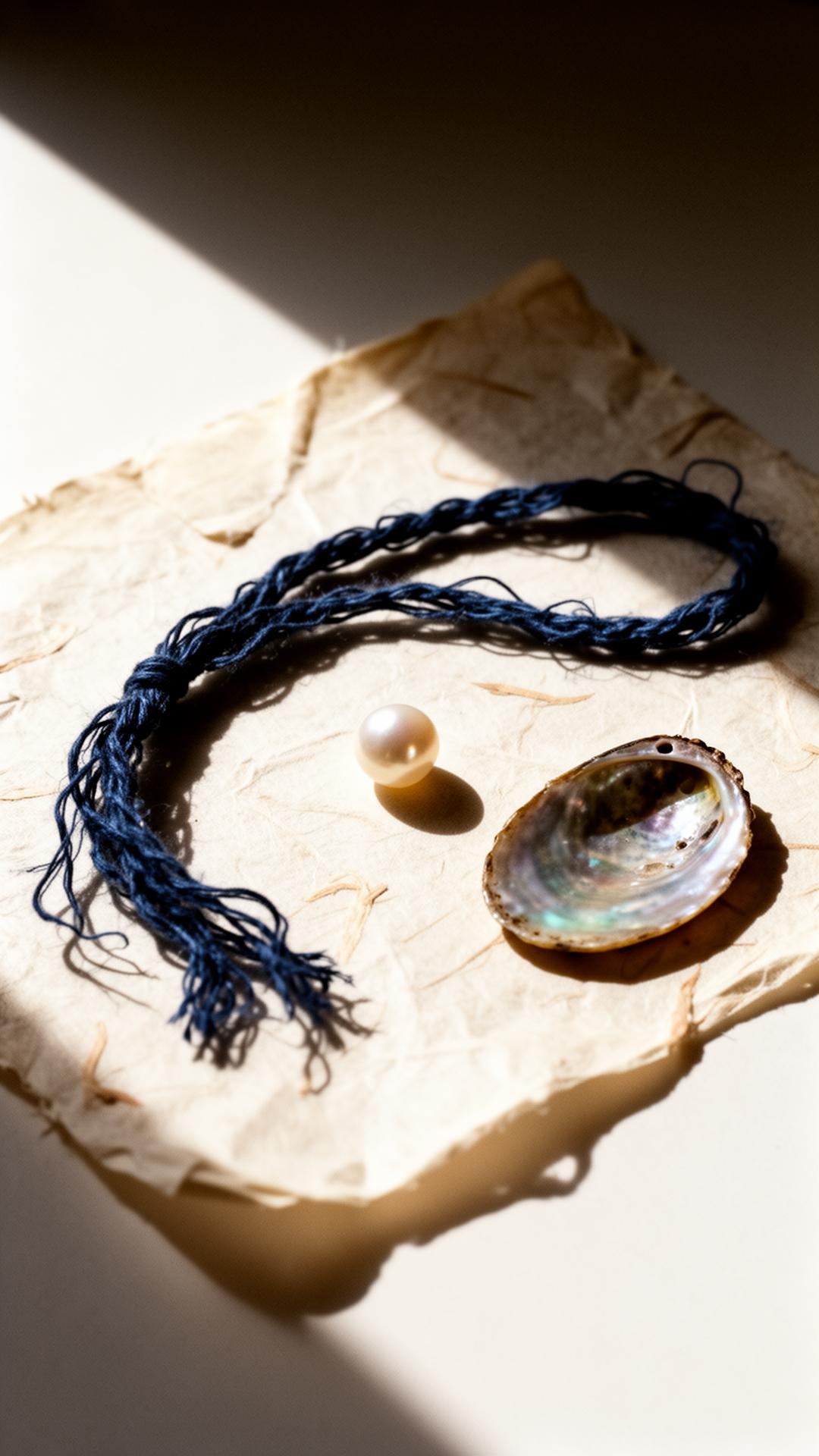
Every pearl is hand-strung. Every garment is sewn in small batches. Nothing in the house is designed to be replaced — only mended, kept, inherited.
小
Made small
Batches of fifty or fewer. Numbered. Dated.
久
Made to last
Mended for free, for the lifetime of the piece.
縁
Made in relation
Designed with the people who still dive these waters.
The Return
Three percent, named, and published.
Three percent of our gross revenue — not profit — flows each year to named Indo-Pacific marine conservation partners. The list is published. The amount is published.
No object we make will save the ocean. But we can fund the people doing the real work, in the seas this house was born from, and we can be honest about the gap between what we do and what's needed.
Join the house