Five Dives Across Japan, Korea And The Sulu Sea
From the ama village of Ōsatsu to the coral atolls of Tubbataha — five sites we return to slowly, with the people who belong to them, and with as much understanding as we can bring.
There is a kind of dive list the internet loves to produce and divers love to consume: bucket-list, top-ten, must-descend-before-you-die. We have never been able to write one of those, because the waters of Japan, Korea and the Sulu Sea are not a bucket list. They are inhabited. By women who have free-dived these coastlines for centuries. By communities whose fishing calendars still bend around tides and moons. By reef ecosystems whose survival depends, in part, on how their visitors behave.
So we offer these five not as conquests but as places we have been allowed to visit, and as an attempt to give that allowance some substance. Each entry has two parts: a reason these waters matter culturally, and the practical guidance for visiting them in a way that honours that reason. The second part is the one that usually goes missing in dive guides. We have tried to write it.
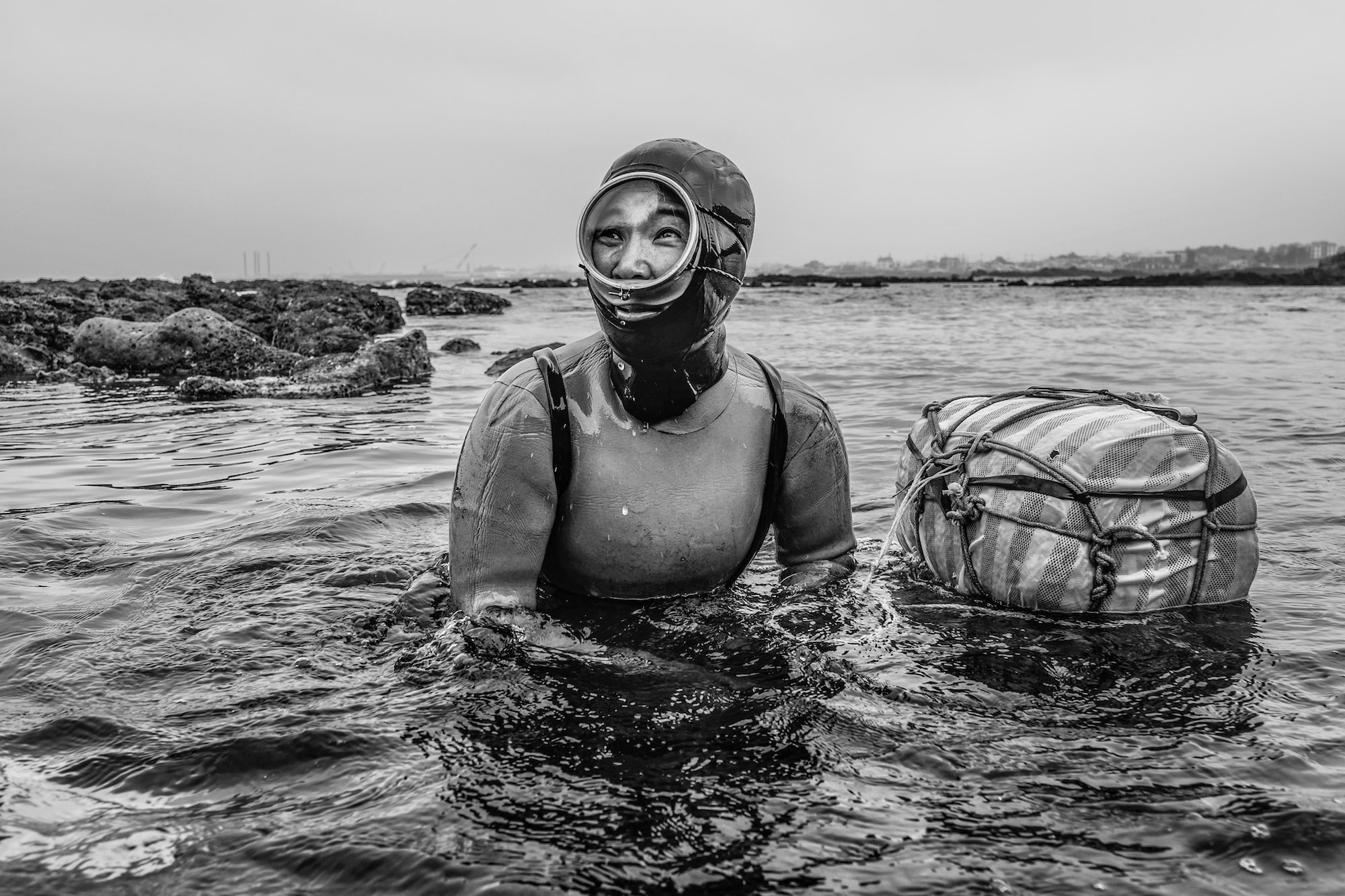
The village of Ōsatsu, on the Shima Peninsula in Mie Prefecture, is home to the largest active community of ama divers in Japan — approximately seventy to eighty women, average age seventy, still entering the water most mornings to harvest abalone, turban shell, sea urchin, and seaweed. The tradition they are continuing has documentary evidence stretching back over two thousand years. The ama of Ōsatsu are not performing a heritage experience. They are going to work.
This distinction matters for the visitor, because the ama have built a set of formal and informal boundaries around their working waters that deserve to be understood before you arrive. The shallow bays around Ōsatsu where the ama work are governed by seasonal closures, catch-size minimums enforced by hand — any abalone below a certain size is returned to the rock face, always, as a matter of generations-old practice — and specific taboo days when no ama enters the water. The most important of these is the Midsummer Day of the Ox, but there are others in the ritual calendar. These are not government regulations; they are the conditions under which the fishery has sustained itself for two millennia. Breaking them unknowingly is still breaking them.
“The ama call their signature surfacing whistle the isobue — literally "shore whistle." It is listed among Japan's One Hundred Views and Sounds.”
The best way to arrive at Ōsatsu is through the amagoya system — the small huts on shore where ama rest between dives, warm themselves, cook and eat the catch of the morning. Several of these huts (including Amagoya Osatsu Kamado Mae-no-Hama and Ozegosan) now receive visitors for lunch, grilling freshly harvested seafood over a charcoal fire at the hearth that is also the divers' warming place. Reiko Nomura, the leader of Hachiman Kamado, continued diving until the age of eighty and is now ninety-three. The conversation at the fire, if you have a translator or an interpreter app, is worth more than any museum exhibit.
If you want to dive the waters of Ōsatsu yourself, do it with a licensed guide arranged through the Ōsatsu DMO or the Toba tourism office. Do not enter the ama's working bays independently. The rocks have names. The beds have histories. Diving them without that knowledge is not exploration; it is trespass.
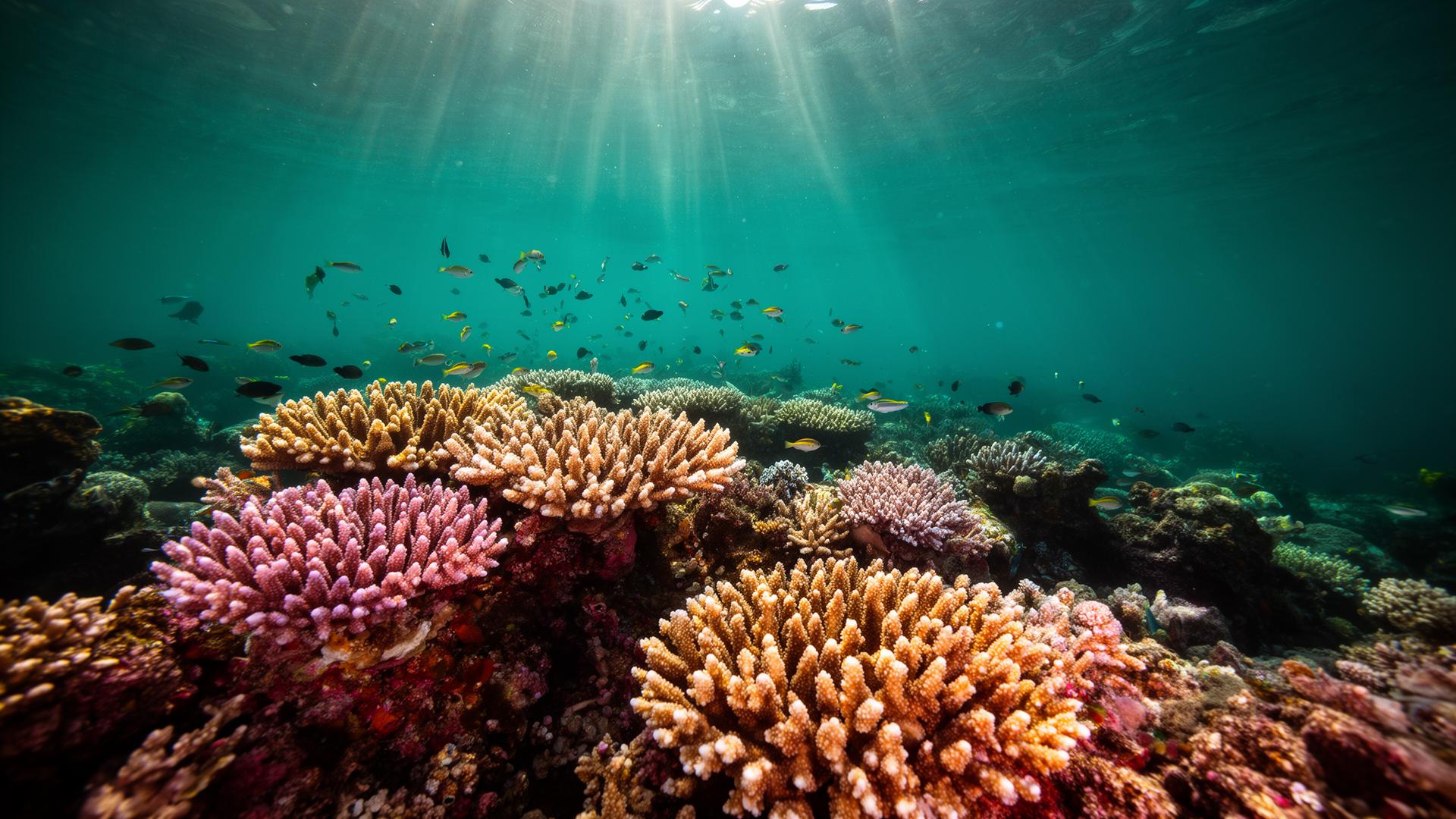
The Kerama Islands — twenty-two islands southwest of Naha, designated a national park in 2014 — represent something rare in a region that has spent decades watching its reefs decline: a place where the coral is coming back. More than ninety-five percent of the coral in the Keramas survives in reasonably healthy condition, an achievement credited in part to the national park protections that prohibit commercial fishing at scale and regulate dive site access. Visibility averages thirty metres. The water has a colour specific enough that divers call it "Kerama Blue."
The Ryukyu Islands have a cultural identity distinct from mainland Japan that long-term visitors to Okinawa tend to understand and short-term tourists often miss. The Ryukyuan people maintained an independent kingdom until 1879, have their own language (Ryukyuan languages are not dialects of Japanese but related Japonic languages), and an oral and ceremonial tradition that is quite different from anything on Honshu. The islands you are diving have names and stories in Ryukyuan before they have names in Japanese. That context is worth carrying underwater.
“The Ryukyuan concept of nuchi du takara — "life is the greatest treasure" — is the cultural foundation of the island's approach to the natural world.”
The practical regulations here are enforced, not merely stated. Conventional chemical sunscreen is banned throughout the national park, and dive operators enforce this at the boat. Mooring is on designated buoys only — no anchoring on reef. Some sites are closed to diving in specific seasons to protect nesting sea turtles. Dive operators who operate in the Keramas are aware of these rules; your job is to ask your operator whether they enforce them and choose accordingly. An operator who doesn't mention reef-safe sunscreen before you get on the boat is worth questioning.
Jeju Island is the Haenyeo's home, and the Haenyeo's home is governed by rules older than the tourism industry that has grown up around them. The approximately 2,500 active Haenyeo on Jeju — ninety-eight percent of them over the age of fifty — dive in specific zones governed by their *eochon-gye*, the village fishing cooperative that holds the fishing rights to a defined stretch of sea. Each cooperative sets its own seasons, its own closures, and its own rules about what can be taken. These are not suggestions. They are the economic and legal foundation of the Haenyeo's livelihood.
The boundary a visiting diver most needs to understand is simple: the Haenyeo work shallow water, typically between two and twenty metres, and a scuba diver in the same water at the same time is an intrusion — loud, disruptive to the marine life the Haenyeo are working with, and uncomfortable for the diver being crowded by the presence of a bubbling tank beside them. The convention on Jeju, enforced informally but firmly by the cooperatives, is that scuba divers and freedivers work the deeper walls below the Haenyeo harvest zones. The Haenyeo's water is their water. The outer walls below fifteen metres are where the recreational dive sites are.
“They do not need external institutions to tell them how to protect a reef they have been protecting for four hundred years.”
For the cultural visit, not the dive: the Haenyeo Women Diver Show at Seongsan Ilchulbong (Sunrise Peak) runs daily at 1:30 PM and 3:00 PM and gives visitors a structured context for what they are watching. Better still, visit the Haenyeo Museum in Hallim-eup before anything else — opened in 2006, it holds the history, tools, and oral records of the tradition in a way that makes the subsequent encounter with the Haenyeo themselves far more legible. Buy your seafood from the Haenyeo's own stalls, not from the tourist-facing distributors who may be sourcing from elsewhere.
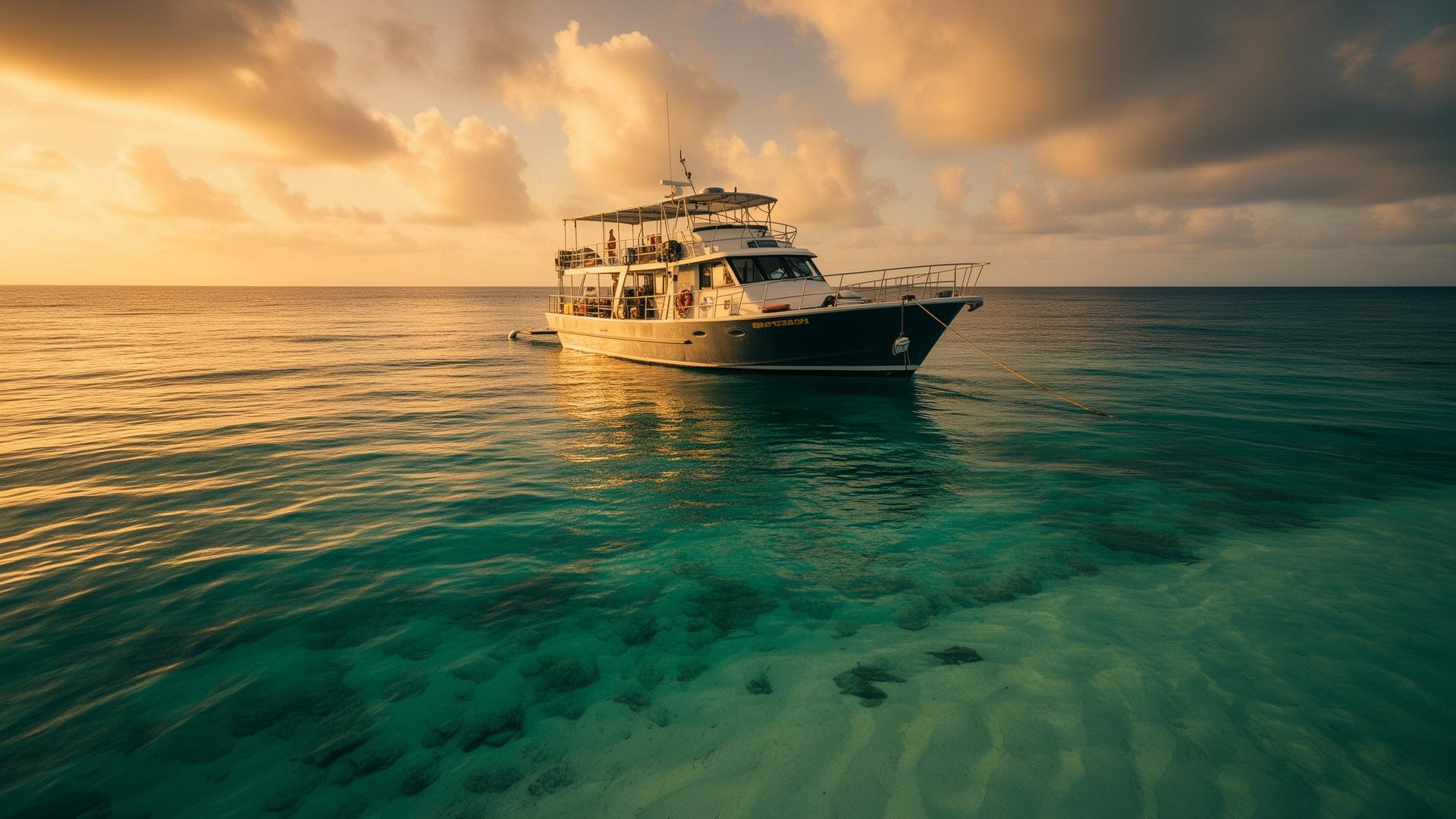
Tubbataha sits 150 kilometres from the nearest land, in the middle of the Sulu Sea. Two coral atolls — North Atoll and South Atoll — rise from the deep ocean floor and sustain one of the most biodiverse marine ecosystems in the Coral Triangle: over 350 species of coral, more than 500 species of fish, 11 species of shark, manta rays, sea turtles, and schooling pelagics that have largely disappeared from more accessible sites in the region. There are no resorts on Tubbataha. There are no day trips. The only way in is by liveaboard, during a narrow season determined by the Sulu Sea's weather, and the only way out is the same.
The isolation is what has preserved it. So has the presence of year-round park rangers — funded in part by the US$145 conservation fee every visiting diver pays on arrival in Puerto Princesa. Those rangers are enforcement officers protecting the park from illegal fishing, and they do their job in one of the more remote and sometimes dangerous stretches of water in the southern Philippines. The fee is not a donation to a charity. It is an operational payment to a protection system that is the reason the reef exists in the condition it does. Pay it as you would a rent: knowing that the use of the space depends on the payment, and that there is no alternative arrangement.
“The waters around Tubbataha are ancestral Sama-Bajau fishing grounds. Visiting Tubbataha well means knowing this history.”
Practically: book twelve months ahead for April and May, which are the peak months with the calmest seas and highest marine life activity. Permits are arranged by your liveaboard provider; verify that your chosen operator appears on the Tubbataha Management Office's approved vessel list before you hand over a deposit. Drone use in the park requires a separate permit applied for at least two months in advance through the Tubbataha Management Office. The reef itself enforces a no-touch policy; your buoyancy is your primary conservation tool at every site.
Tawi-Tawi is the southernmost province of the Philippines, a chain of islands at the edge of the Sulu Archipelago, the ancestral waters of the Sama-Bajau — the sea nomads whose name, in their own Austronesian root language, means *together* and *kin*. The Sama-Bajau have lived on, above, and in these waters for centuries, and the reefs here are extraordinarily healthy precisely because a community whose theology holds that humans are peers of the other beings of the sea — not their masters — has been their primary stewards.
We are stating clearly: Tawi-Tawi is not a tourist destination, and this entry is not a how-to-book guide. The region faces serious security advisories that change frequently and must be checked through your country's foreign affairs ministry before any plan is made. The infrastructure for organised dive tourism does not exist in the way it does at the other four sites on this list. We include Tawi-Tawi because leaving it out would be to treat the Sama-Bajau's waters as invisible — which is the standard approach and one we are trying to resist.
“Many Sama-Bajau communities remain stateless — without citizenship in any of the nations whose waters they have fished for generations.”
If you are one of the small number of people with the professional relationships, the security clearance, and the genuine community invitation to visit these waters: go with a Sama-Bajau guide, on a Sama-Bajau boat, paying Sama-Bajau wages and buying from Sama-Bajau producers. Do not photograph people or objects without explicit permission. Do not purchase anything made from shell, coral, or protected marine species, no matter how it is offered or framed. Listen more than you document. The dive, if you make it, will be secondary to the education.
For everyone else: the most meaningful action available is to support the organisations working on Sama-Bajau land and sea rights — including statelessness legal aid, customary fishing right documentation, and marine stewardship recognition — and to be aware that the health of the Sulu Sea's reefs is inseparable from the political status of the people who have maintained them.
A note on the phrase "diving responsibly." We have used it deliberately sparingly, because in practice it has come to mean almost nothing — a gesture toward something good that requires no specific action. What we have tried to offer instead is specificity: which hut to book in Ōsatsu, what the Haenyeo cooperative boundary looks like when it is enforced, what the US$145 Tubbataha fee actually funds, what the Tawi-Tawi situation actually is.
The specificity is the respect. These places exist in a particular way, governed by particular people with particular histories, and treating them as though they are generic dive sites that differ only in marine life and visibility is a failure of imagination as much as a failure of ethics. The five places above have earned their reputation not from the depth of their walls or the density of their sharks but from the quality of the human decisions — made over centuries, in most cases — that have kept them in the condition they are in. The least we can do when we enter those waters is to understand what those decisions were.