The Breath Before
A working morning with the Haenyeo of Jeju — four hundred years of the same dive, still being made.
The alarm does not wake her. The tide does.
At five-fifteen on a November morning, Ok-sun Kim, sixty-seven, moves through her kitchen in the dark without turning on a light. She has made this same journey — kitchen to road to shore — since she was nineteen. Forty-eight years of mornings identical in their structure, differentiated only by season, weather, and the particular mood of the sea on a given day. She does not need light. She knows every stone.
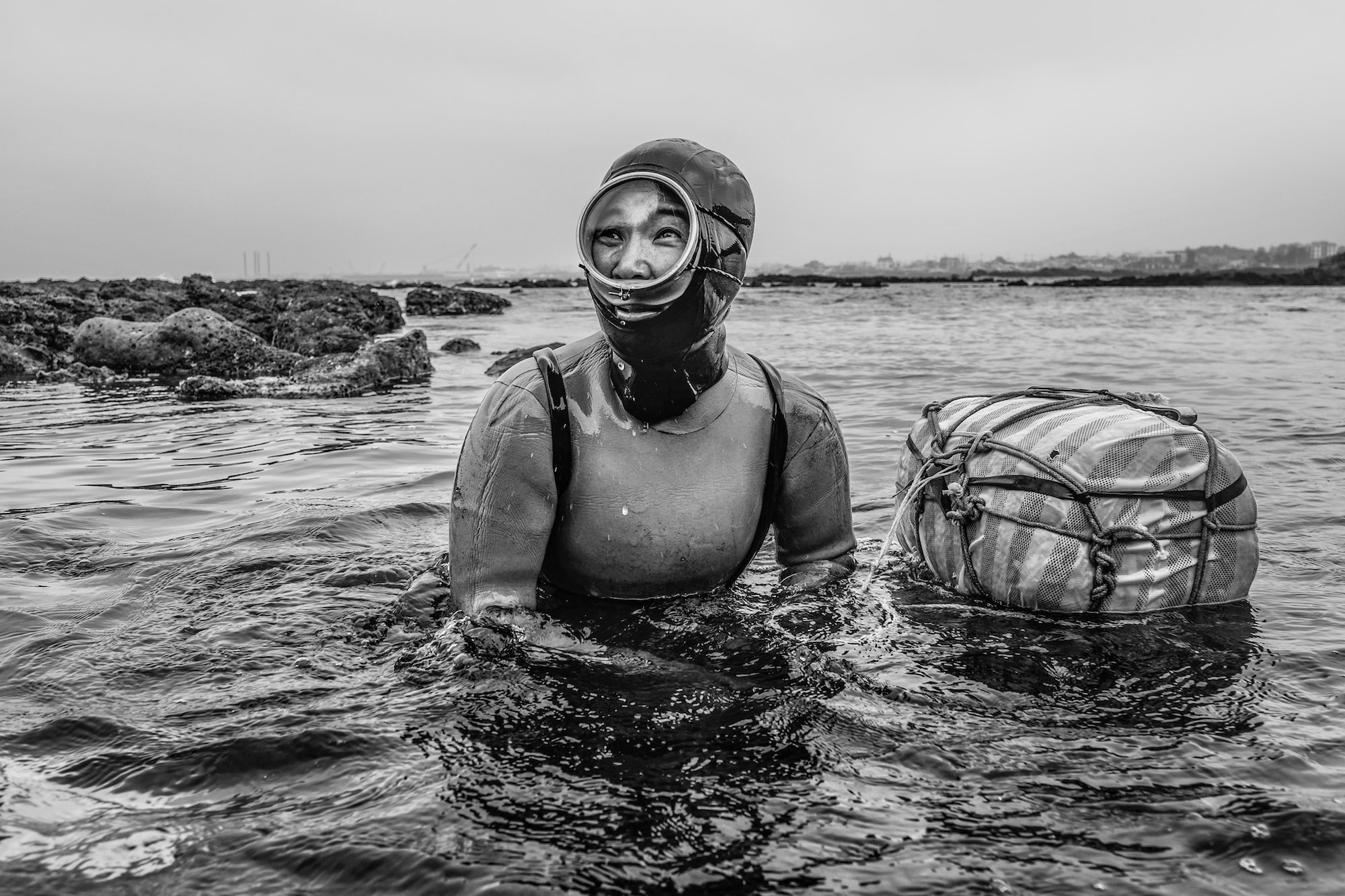
Ok-sun is a *sanggun* — a senior Haenyeo, the highest of the three ranks a diver can hold on Jeju Island. She earned it in her forties, when the older women who had taught her began to retire, and she found herself the one leading the group into the water each morning. The sanggun reads the tides, chooses the beds, decides when it is safe to go in and when it is time to come out. On this morning, she has decided: the swell is manageable, the visibility acceptable, the abalone season still open by three weeks. They will dive.
“She does not count the seconds. She counts the tides.”
The dive site is a twenty-minute walk from Ok-sun's house, down a path that skirts the basalt sea-cliffs Jeju is made of. By the time she arrives, four of the other women are already there, in various states of preparation. The youngest is forty-two — a relative newcomer who returned to Jeju three years ago after a decade working in Seoul as an accountant. The oldest, at seventy-nine, is Mi-ja, who has been diving since 1963 and who shows no sign of stopping. Mi-ja's daughter is also in the group. So is her daughter-in-law.
This is what a working morning looks like from the outside. From the inside — from the water — it is something else entirely.
The Haenyeo do not warm up. They enter the water as they have always entered it: deliberately, without ceremony, without announcement. The wetsuit — a modern concession that the oldest Haenyeo still regard with mild suspicion, preferring the cotton *sochangui* of earlier generations — goes on in pieces, with the efficiency of people for whom equipment is a means and not a subject. Ok-sun is in the water by five forty-five. The light is not yet full.
The first dive of the morning is always the hardest. The body has not yet remembered what it knows. Breath-hold diving is a physical and a mental discipline in equal measure, and the mind, fresh from sleep, requires a few minutes to accept the conditions. Ok-sun surfaces from her first dive after ninety seconds — a modest time by her standards — shakes the water from her face, and makes the sound.
It is called *sumbisori*: the whistle the Haenyeo make on surfacing, a half-involuntary exhalation that serves simultaneously as a breath-recovery technique, a community safety signal, and — this is harder to explain, but the women will tell you it is true — a kind of emotional punctuation. You have been under. You have returned. The sumbisori says: I am here. It says: the sea let me back.
After forty-five minutes, Ok-sun's net bag holds eleven abalone and a small tangle of *gulfbandaegi* sea cucumber. The abalone are measured by eye. Three are too small. She returns them without hesitation, smoothing them back against the rock face in the orientation from which she took them. This is not law, or not only law — it is habit, and habit here is older than law. Her grandmother taught her mother, and her mother taught her: you take what the sea can give back. What it cannot give back, you leave.
The equal-sharing rule operates quietly in the background of the morning. When the women come in, the catch is pooled. Mi-ja, at seventy-nine, works shallower water now, and her haul is smaller. The forty-two-year-old accountant-turned-diver surfaces after each dive with the slightly surprised expression of someone still learning to trust her own body in the water. Her bag, too, is modest. None of this matters. The calculation is done collectively, and the share is equal. The Haenyeo have operated this way since at least the seventeenth century. It is, among other things, why younger women still choose to join.
“You take what the sea can give back. What it cannot give back, you leave.”
The dive session ends at eight-thirty, two and a half hours after it began. The women come in by ones and twos, collect their bags, and move up to the *bulteok* — the communal warming hut, a low stone structure above the tideline with a fire at its centre. The bulteok is where the session actually ends. In the water you are a diver. In the bulteok, you are a person again, with opinions about the morning.
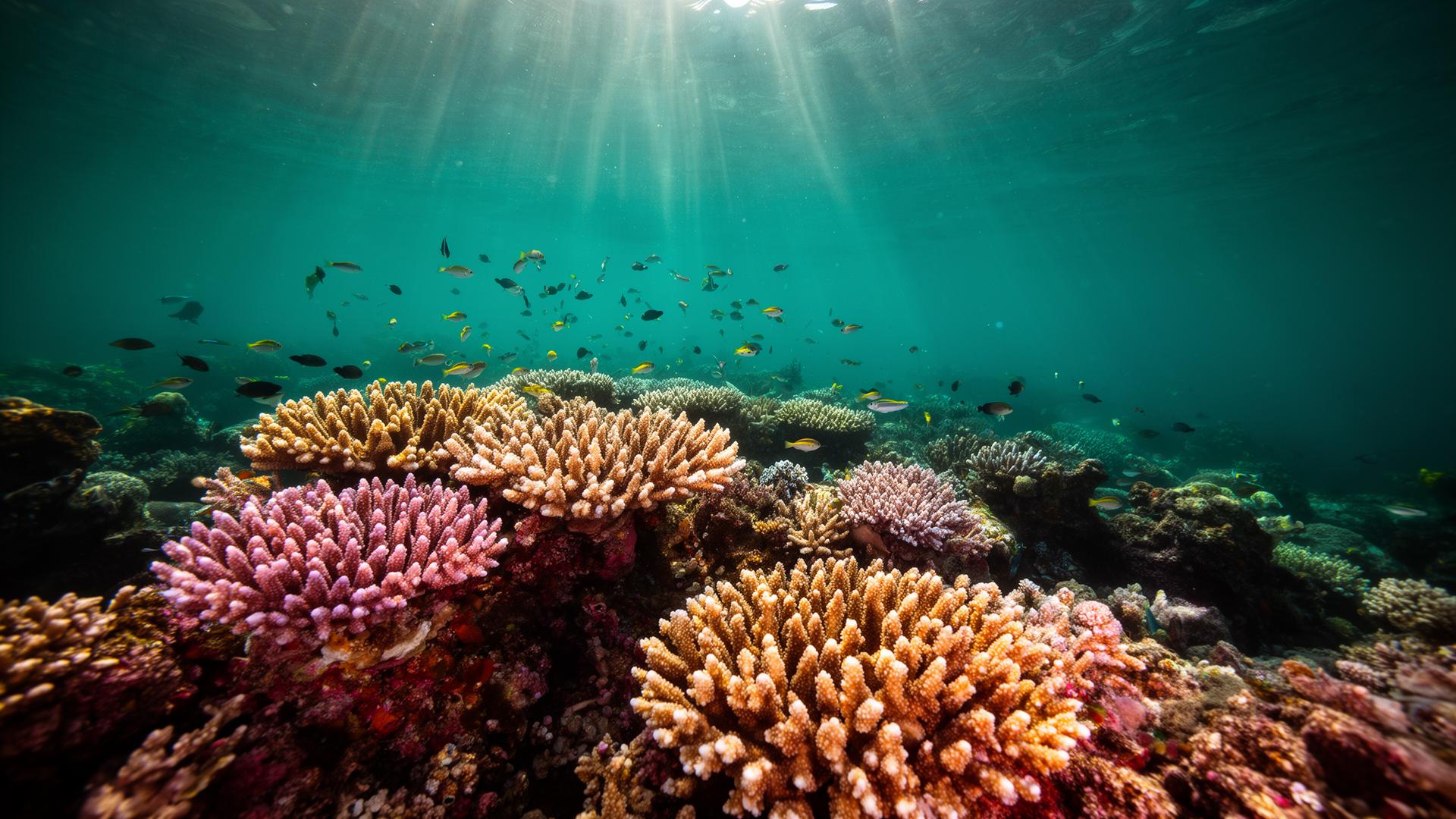
The conversation runs across three generations without apparent effort. Mi-ja, still warming her hands over the fire at seven forty-five AM, recounts a dive site she worked in 1971 that no longer exists — the reef was bleached out in a warming event six years ago, and she does not use the word "climate" but she describes what she saw with a specificity that no satellite could reproduce. The forty-two-year-old listens. Ok-sun contributes an observation about the abalone beds in the northern section: thinner than last year, shifted slightly eastward, probably following the colder water. She has been watching these beds for forty-eight years. She knows when something has moved.
At nine o'clock, a younger woman arrives who is not a diver. She is a graduate student from Seoul National University, writing a thesis on marine ecosystem change, and she has arranged with Ok-sun to interview Mi-ja about water temperatures in the nineteen-seventies. She has brought a digital recorder and a notebook. Mi-ja looks at both with polite neutrality and begins to talk. The data in her memory, it turns out, extends back sixty years and covers water temperature, species distribution, seasonal arrival patterns, and the structural changes to three specific reef formations. The graduate student's notebook fills rapidly. The digital recorder runs.
This is what the Haenyeo archive looks like: it lives in the bodies and memories of women in their sixties, seventies, and eighties, transmitted through practice to the women in their forties, and imperfectly captured — because it can only be imperfectly captured — by the instruments that arrive too late to record what has already been lost.
UNESCO inscribed the Jeju Haenyeo on its Representative List of the Intangible Cultural Heritage of Humanity in 2016. The FAO designated the diving culture a Globally Important Agricultural Heritage System in 2023. There are approximately 2,500 active Haenyeo on Jeju today, down from 23,000 in 1965. Ninety-eight percent are over fifty.
These numbers are stated not as an obituary but as a fact about what transmission requires. The knowledge does not live in the UNESCO inscription. It does not live in the FAO designation. It lives in Ok-sun's hands, in Mi-ja's memory of a reef that no longer exists, in the forty-two-year-old accountant's body slowly learning to trust itself underwater. If the transmission breaks — if no younger women enter the water — the knowledge ends, and no institutional recognition will retrieve it.
This is not a lament. It is a description of what a living tradition actually is: fragile, specific, dependent on the continued willingness of actual people to do the work. The Haenyeo, for their part, do not appear to be lamenting. They appear to be diving.
At eleven o'clock, Ok-sun is back in her kitchen. The abalone are cleaned and stored. The session bag is rinsed and hung to dry. The sumbisori of the morning is already fading into the specific silence that follows physical work in cold water. Tomorrow, if the tide allows, she will do it again. She has been doing it again, every day the tide allows, for forty-eight years. She does not count the seconds. She counts the tides.
About this piece
Ok-sun Kim and Mi-ja are composite portraits drawn from ethnographic accounts of Haenyeo diving culture, including UNESCO documentation, FAO field studies, and the oral histories collected by the Jeju Haenyeo Museum. They are not real named individuals. The Sisterhood section will commission original reportage and portraiture from Jeju from Season 2 onward.