The Haenyeo: A Quiet Kind Of Strength
On Jeju Island, the sea women have been diving for four hundred years. They do not perform their courage. They simply go back into the water — at sixty, at seventy, at eighty-five.
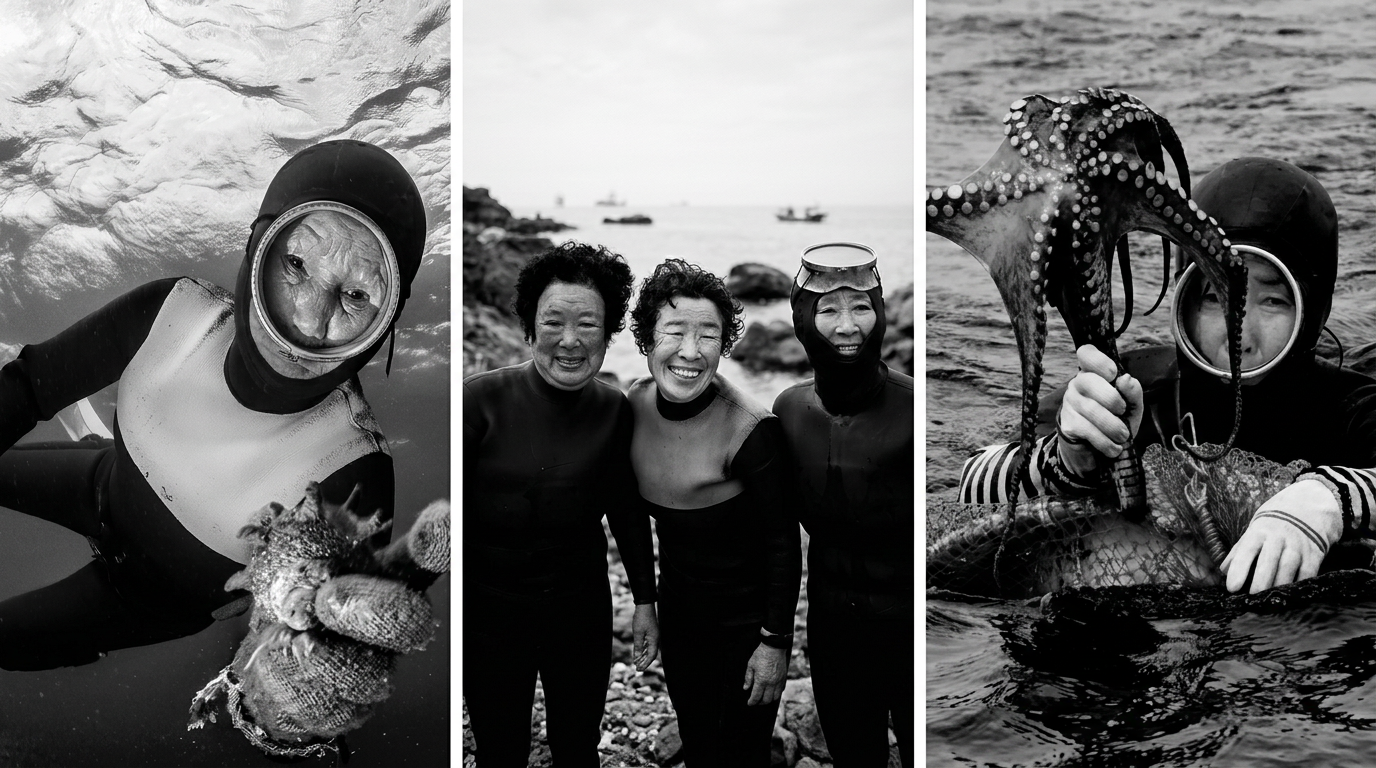
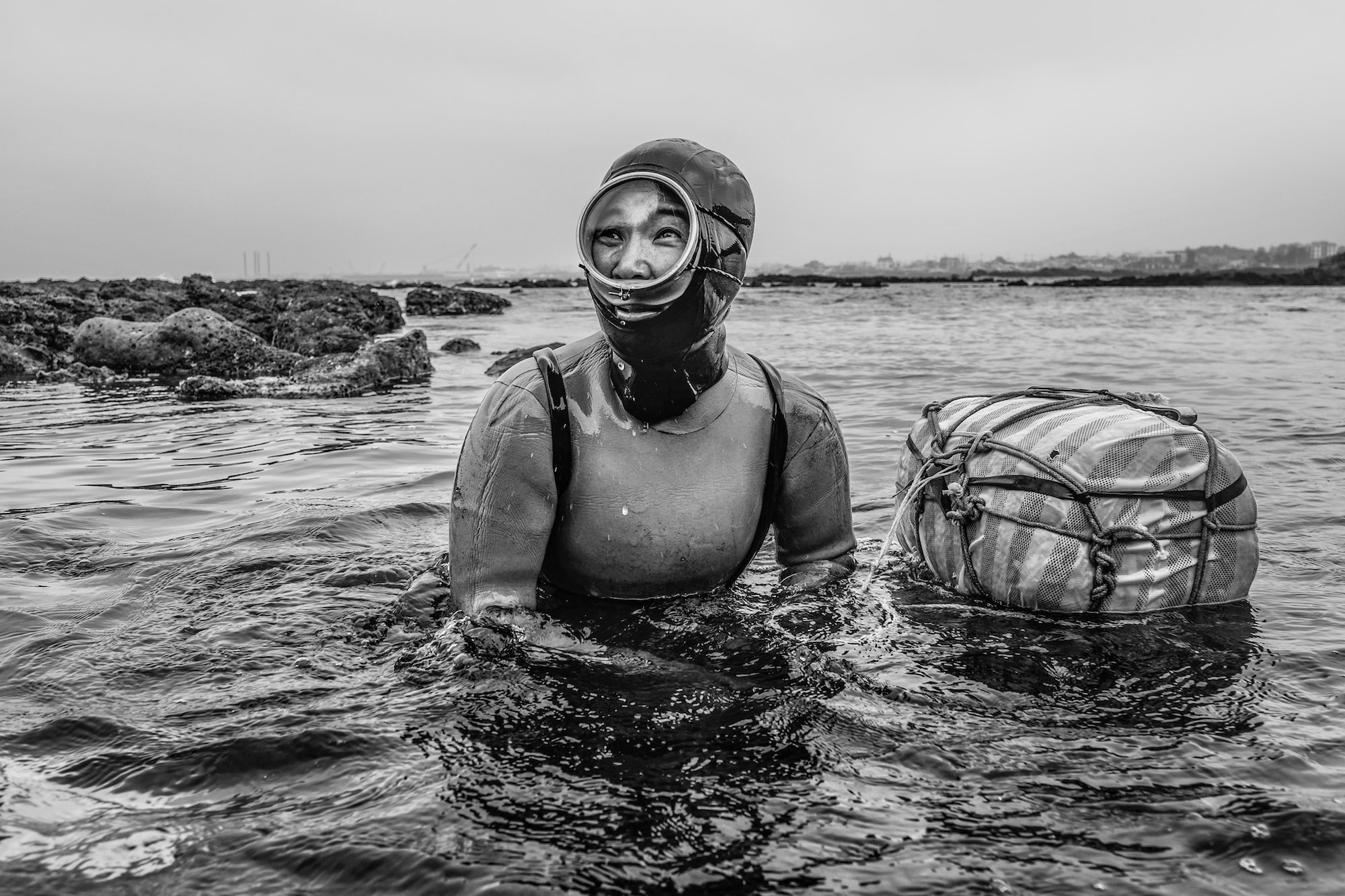
The first thing you notice on the rocks at Gwideok-ri is that nobody is watching themselves. The haenyeo are pulling on wetsuits over thermal layers, checking weight belts, lifting the orange tewak floats that have not changed shape in a century. They speak to each other in the flat, cut-short Jeju dialect that mainland Koreans struggle to follow. Nobody films. Nobody narrates. The work begins.
Halmang Kim is seventy-eight. She has been diving these waters since she was eleven. Her mother dove until she was eighty-three; her grandmother until the cold finally stopped her at ninety-one. When we ask, through a translator, how deep she goes, she shrugs. "As deep as the abalone is." Around fifteen meters, on a single breath, four or five hours a day, in water that hovers around fourteen degrees in spring.
The haenyeo of Jeju are, by any measurable standard, among the most extraordinary athletes alive. UNESCO recognised them as Intangible Cultural Heritage in 2016. Sports physiologists have spent decades studying their breath-holds, their cold tolerance, their cardiovascular efficiency. None of this interests the women themselves. They are not athletes. They are workers. The distinction matters to them, and it should matter to us.
There is a particular kind of female strength that western culture has almost no language for. It is not the strength of the gym, the podium, or the personal best. It is not photographed. It is not narrated in the first person. It is the strength of going back, day after day, decade after decade, into something cold and difficult and necessary, because the household depends on it and the cooperative depends on it and the sea has not yet said no.
On Jeju, this strength is organised by age. The haenyeo divide themselves into three ranks — *hagun* (beginners, often in their forties and fifties), *junggun* (middle, the working majority), and *sanggun* (the most senior, the deepest divers, the ones who decide). Authority flows upward with age, not downward with youth. The seventy-year-old leads. The eighty-year-old is consulted. When a sanggun says the swell is wrong, the boats stay in.
This inversion is not symbolic. It is operational. The oldest women hold the maps of the sea floor in their bodies — which rock the octopus shelters under, which channel the current pushes through in May, which cove the abalone has moved to since the typhoon. That knowledge is not transferable by writing. It is transferable only by another forty years in the water, beside someone who knows.
Which is why the cross-generational structure is the thing, not a feature of the thing. A young haenyeo at thirty is still considered a learner. At fifty she is finally trusted to dive the harder grounds. At seventy she is at the height of her authority. The arc of a haenyeo life moves opposite to the arc most modern women are sold — value does not peak early and decline. It accumulates. It deepens. It is taken more seriously the longer it lasts.
There is something we could learn from this, and it is not a lesson about the sea. It is a lesson about what a culture chooses to value in its women. Jeju has, for four hundred years, organised an entire economy around the principle that an older woman's judgement is worth more than a younger woman's stamina. The sea enforced it; the women institutionalised it; the cooperatives still hold it.
The haenyeo are aging out. The youngest active diver on Jeju is in her late thirties; the oldest is past ninety. Fewer than three thousand remain, down from twenty-six thousand in the 1960s. Daughters do not, mostly, take up the suit. The cooperatives know this. They are training the next generation slowly, deliberately, without theatre — a school here, an apprenticeship there — and they are honest that something irreplaceable may not survive the century.
We do not write this to romanticise them. The haenyeo would find the romance embarrassing. The work is cold and the joints ache and the income is modest and the sea, lately, is changing in ways that frighten the oldest among them. Warming water. Vanishing kelp. Abalone where there was none, none where there used to be plenty.
We write this because the Sisterhood we are trying to gather around Shio no Wa is, at its root, an argument about what strength looks like when no one is performing it. The haenyeo answered that question four centuries before we thought to ask it. They answered it by going back into the water at seventy, in a wetsuit older than the photographer on the rocks, with a knife at the belt and a float on the line, and surfacing again, and again, and again, until the day the body finally says enough.
And then, in most cases, going one more season anyway.