The Year the Sea Keeps
The Ama of Ise-Shima do not measure time by the calendar. They measure it by the tide, the taboo, and the three visits to the mountain temple. On the annual ritual of a diving year — and what it means to live inside a cycle, not against one.
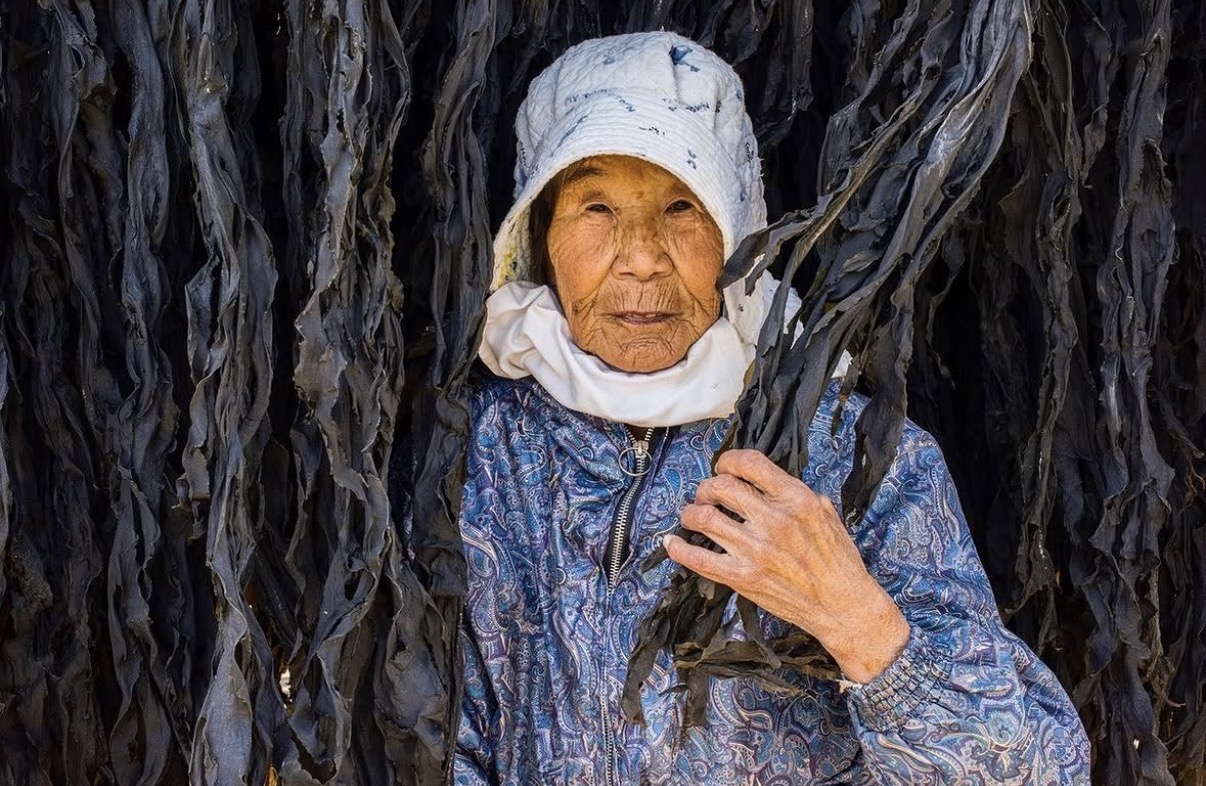
On the first morning of the new year, before the sun has risen, Kaori Arai walks to the sea.
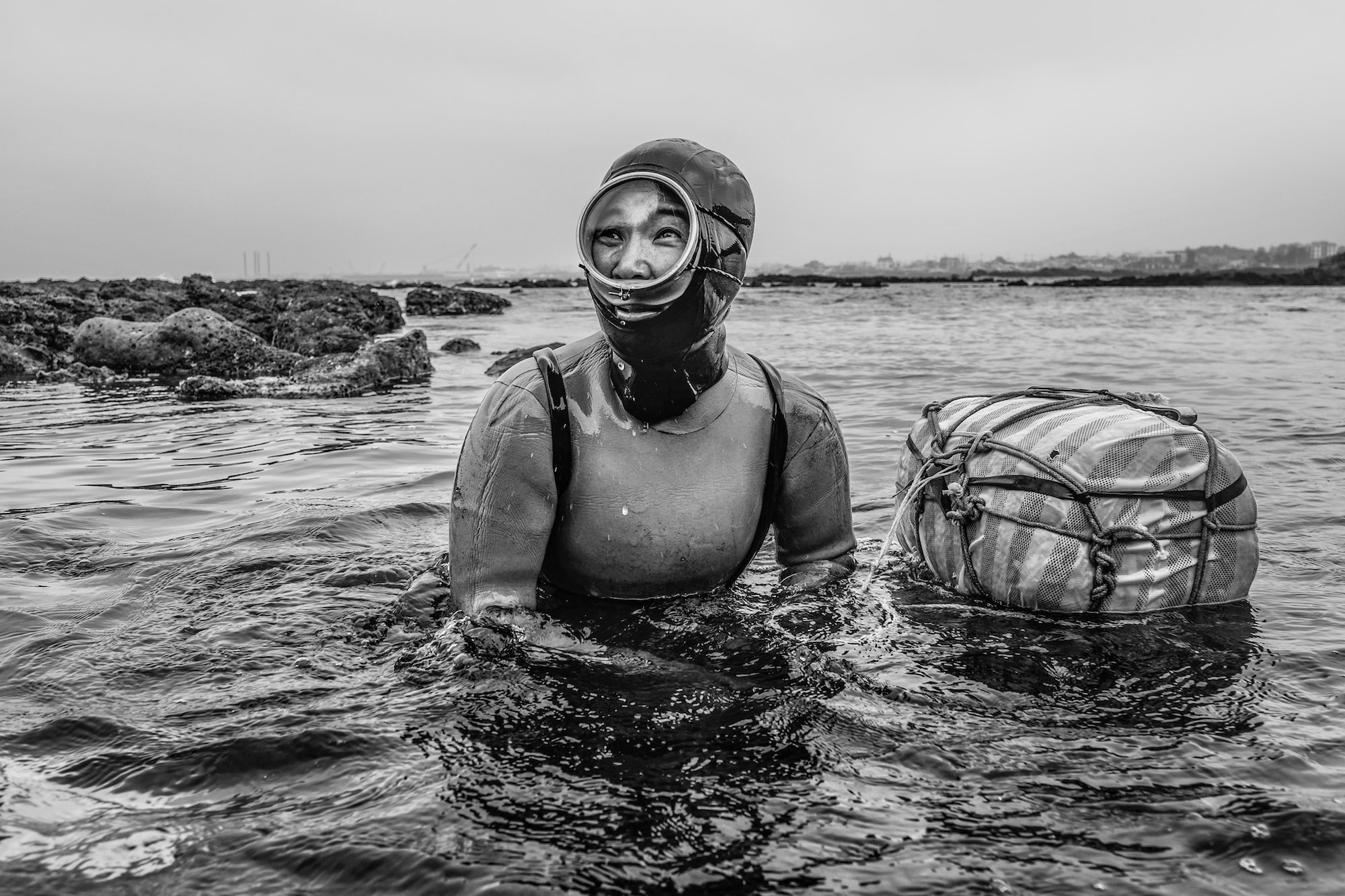
She is an Ama diver in the community of Shijima, on the Ago Bay coast of Mie Prefecture in central Japan. She has been diving these waters for decades. On most mornings she enters at ten and again at one, spends an hour in each session, measures each abalone against the handmade wooden gauge her community uses — 10.6 centimetres; anything smaller goes back — and warms herself afterward in the small hut above the tideline where the other women are already at the fire. This is a working morning. It looks like every other working morning in the season.
New Year's morning is not a working morning. New Year's morning is different, and the difference is the point.
Before dawn on the first day of the year, the Ama of Ise-Shima enter the sea to bathe in the *wakashio* — the young tide, the first tide of the year — and to see the sunrise from the water. They have done this, or a version of this, for as long as there are records of Ama divers on this coast. They pray to the sea god for good catches and safe dives in the year ahead. Then they come out, and the year has begun.
The *wakashio* is not a ceremony that exists separately from the diving life. It is the first act of the diving year. The year does not begin on the first of January in any meaningful sense for the Ama; it begins when they step into the sea and address it. Everything between that moment and the autumn closing is the year. Everything after is its end and its preparation for renewal.
The Ama of Ise-Shima — and specifically those of Shijima, Osatsu, and the wider Shima Peninsula communities — mark their year through a sequence of ceremonies that bracket and punctuate the diving season with the same precision they apply to measuring abalone. Each ceremony is tied to a specific date or condition in the natural world: the first tide of the year, the arrival of spring, the appearance of sharks, the end of harvest. The calendar is not metaphorical. It is operational. It tells the diver where she is in relation to the sea and what the sea requires of her now.
Five moments across nine months, each one a conversation between the diver and the sea. The *wakashio* is an address. The *ishigyō* is a petition, written in sutra and placed underwater. The *kuchiake* is a first day at work that is also a ceremony. The *nōagari* is a rest that is also a negotiation — the sharks have arrived; the diver concedes the water. The autumn thanksgiving is a closing of accounts, honest and complete.
There is a way of understanding time that is not the clock or the calendar but the tide. Tides have a period of approximately twelve hours and twenty-five minutes, which means they do not align with the day. They drift slowly forward — each high tide arriving about fifty minutes later than the one before — so that the sea is always, if you are watching closely, slightly ahead of where you left it yesterday. A diver who works with tides rather than against them lives in a subtly different relationship to duration than someone whose life is organised by the twenty-four-hour clock. She does not ask when. She asks where is the tide now and where will it be in two hours.
The Ama's ritual year is tide-time extended across twelve months. Each ceremony arrives not because the calendar says it is time but because the natural world has reached a condition — the first tide of the year, the end of the rainy season, the arrival of the sharks — that demands a response. The response is always the same in form: address the sea, place an offering, adjust the practice. The ceremony is not a commemoration of something that happened in the past. It is a management of a relationship that is ongoing.
“The stone sutras are still there, on the seabed. The sea has been asked, and has given, and has been thanked.”
This is the structural difference between the Ama's calendar and the conservation programme. A conservation programme is designed from outside the relationship — by scientists, managers, governments — and applied to a fishery that exists independently of the programme's designers. The Ama's ritual year is designed from inside the relationship, by women who have been participants in it for generations, and its constraints — the size minimums, the closed seasons, the rock-turning, the returned juveniles — are not rules imposed on the practice but the practice itself. You cannot separate the *kuchiake* ceremony from the abalone-size gauge. They are the same thing: a way of taking from the sea that keeps the sea able to give.
Aonominesan Shōfukuji sits on the mountain above the Osatsu coast, and the story the temple keeps is characteristically Japanese in its layering of the practical and the mythic. The principal image is the eleven-faced Kannon — the goddess of mercy — who is said to have appeared on Osatsu beach and ridden a whale to the mountain. The Ama of the area have been climbing to this temple at the turning points of their year for longer than anyone can establish precisely. The ema — the wooden votive plaques — that line the temple's corridors are so old that the writing is fading. The prayers go back further than the plaques.
The three annual ascents — March, June, September — correspond to the season's structure: before, during, after. Each visit is a different posture toward the sea. The March visit is anticipatory, the sutras written onto the stone and carried down to the water like a letter sent ahead of the diver. The June visit is precautionary — the sharks are in the water and the diver yields, and the yielding is an act of respect rather than fear. The September visit is one of gratitude without transaction. The season is over. There is nothing left to ask. The divers have come up from the sea for the year, and they climb the mountain to say thank you.
Arai-san, after the September visit, speaking to the journalists from Ago Bay who spent time with her on the coast: *"I think a new generation may wish to become Ama divers someday. If the sea improves, more people will want to follow this path."*
The phrase "if the sea improves" is doing a great deal of work. It is describing the decline in shellfish stocks that the Ama have watched, in the water, every day of their working lives. It is describing rising sea temperatures and the kelp forest changes that follow. It is describing the gap between the discipline of the Ama's own practice and the condition of the ocean that their practice is not quite large enough, or powerful enough, or numerous enough to protect against on its own. It is, at the same time, a statement of cautious optimism from someone who has placed the Heart Sutra on the seabed every March for decades and has not yet stopped believing the sea can hear it.
The Ama's white garment — the *isogi*, the full-body cotton robe that was standard until the wetsuit arrived in the 1970s — is white for two reasons, and both of them are true simultaneously. The first is Shinto: white is the colour of ritual purity, of approach to the sacred, of the diver entering the sea as she would enter a shrine. The second is practical: white is believed to deter sharks. The garment is a sacred object and a safety device. It is ritual and it is function. In the Ama's world, these are not separate categories.
The *tomokazuki* — the sea apparition specific to the Shima coast — appears as the exact double of a diving woman. It surfaces beside the Ama underwater, wearing her face, sometimes offering abalone. Those who follow it into the darkness do not return. The Ama wore their white garments marked with the *seiman* — a five-pointed star — and the *doman* — a grid — as talismans against the *tomokazuki*. You can still see these protective symbols painted on walls and carved into objects throughout Osatsu. Their true nature, the tradition says, is unknown and sometimes explained as a hallucination born of harsh maritime labour. But the Ama wore the marks anyway. A hallucination that kills is still something you want a talisman against.
The *tomokazuki* is the Ama's answer to the question every diver eventually faces: what is in the water with me? The Sama-Bajau answer is that the diver is in the water with kin — with the fish and coral who are her siblings in a shared creation. The Haenyeo answer is that the diver is in the water with the sea goddess Jamsugut and the accumulated knowledge of four hundred years of women. The Ama answer is stranger, more unsettling: the diver is in the water with a version of herself, and the version that looks most like her is the most dangerous thing down there. The only protection is the right marking. The only protection is to have dressed correctly before you entered.
“The garment is the practice. The dress is the ceremony. You do not enter the sea and then perform the ritual. The ritual is the preparation to enter.”
In mid-September the season closes and the Ama come up from the sea. The prohibition on taking abalone runs from 15 September to 31 December — a hundred and eight days of winter rest for the shellfish, four months during which the abalone that were measured and returned in May have grown a little larger, have reproduced, have settled into new positions on the rock face. The sea is doing its work unobserved. The Ama are doing theirs in preparation: maintaining equipment, visiting Aonominesan for the third time, eating the last of the season's catch by the fire in the amagoya.
The amagoya in winter is the community in a different mode. Without the morning sessions, without the equipment spread across the rocks and the wet garments hung to dry, the hut is quieter. But it does not close. Women come, make tea, sit by the fire. The conversation is the same conversation that has been happening in these huts, on this coast, for a very long time. What the sea gave this year. What it held back. Whether the abalone beds are changing. What the winter cold says about next spring. The season is over but the sea is still the subject. It is always the subject.
In January, before the sun rises, Arai-san will walk to the sea again. She will step into the *wakashio*. She will address the new year from the water. The stone sutra placed in March is still down there, on the seabed at Shijima. The cycle will begin again.
The Ama do not measure time by the calendar. They measure it by the tide, the taboo, and the three visits to the mountain temple. In this way they have kept account of their relationship with the sea for two thousand years. In this way — cautious, patient, ceremonial, disciplined — they intend to keep it for longer still.
About this piece
The seasonal ritual detail in this piece draws primarily on the Agobay account of Kaori Arai-san and the Shijima Ama community in Ago Bay, Mie Prefecture, and on documentation compiled by the Arigato Travel cultural programme, the Japan National Tourism Organization's Ama materials, and the Ise-Shima region's own heritage documentation. Arai-san is a real named diver who has given extensive interviews about her practice; her words and her community's ritual calendar are quoted here in their documented form. The *tomokazuki* material is drawn from the Yokai.jp ethnographic archive. Shio no Wa is in conversation with the Osatsu DMO and the Ama Cultural Museum about a formal content-partnership for future issues, which would allow commissioned photography and interview material under an agreed protocol with the community.